In late 2023, during a product design keynote, Airbnb CEO Brian Chesky shared something powerful:
“Design is not just how things look. It’s how they work, how they feel, and how they enter people’s lives.”
When Airbnb launched in 2008, the idea of renting a stranger’s home felt bizarre — even unsafe.
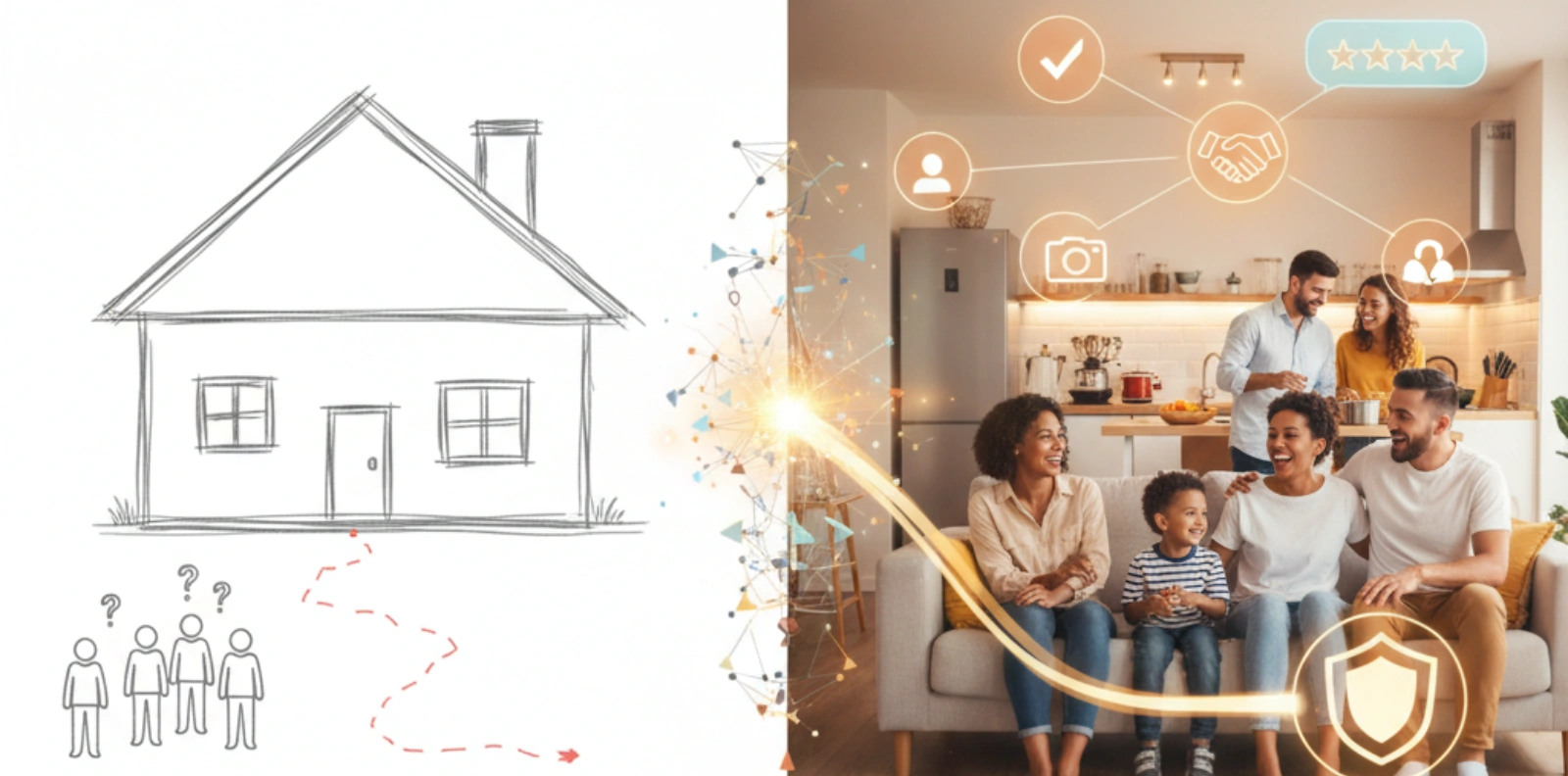
But it worked because the founders designed trust:
Verified profiles
Transparent reviews
Meaningful photography
Friendly UI language
Airbnb didn’t sell rooms.
They sold comfort and belonging — by thinking like designers.
And founders who think like designers build companies that people love — not tolerate.
Why Design Thinking = Founder Thinking
Founders solve problems.
Designers solve problems.
- Together, they:
- Observe real human behavior
- Spot frustrations early
- Prototype before perfection
- Iterate based on outcomes
- Build with empathy
- Create experiences users remember
Design thinking is not a skill —
it’s a superpower for decision-making.
Founders Who Don’t Think Like Designers…
They make three big mistakes:
| Mistake | Impact |
|---|---|
| Build what they love, not what users need | Demand doesn’t follow |
| Overfocus on features, underfocus on experience | Low adoption |
| Delay launches chasing perfection | Miss speed-to-market |
Perfection kills progress.
Assumptions kill product–market fit.
5 Design Mindset Shifts Every Founder Must Make
Transform in 4 intelligent layers:
Build for Behavior, Not Just Logic
Users don’t always do what they should.
They do what feels easiest.
Great design reduces thinking.
Example:
“Login with Google” → 1 click vs 6 fields
Signups increase instantly.
Treat Constraints as Creativity Boosters
Designers love boundaries — they create clarity.
Focus unlocks brilliance.
Example:
Twitter’s 140-character limit → iconic content format
(Sometimes less is more. Literally.)
Prototype Fast, Fail Cheap
The faster you test, the faster you learn.
Wrong quickly > Wrong slowly.
Example:
Instagram launched without videos, stories, DMs
Photos-only → rapid feedback → rapid evolution
Make Every Interaction a Feeling
UI is a handshake. UX is a promise.
<bPeople forget features.
They remember how a product made them feel.
Micro Example:
WhatsApp “typing…” indicator → emotional anticipation
Design for Humans, Not Stakeholders
Approval doesn’t equal value.
Behavior does.
The user is always the CEO — they decide success.
Example:
Snapchat streaks → behavior design → addiction → growth
The Founder’s Design Toolkit
Not software.
Not fancy skills.
- Just 4 everyday habits:
- Ask “Why?” five times before building anything
- Watch users interact, silently
- Celebrate small improvements more than big ideas
- Replace assumptions with real behavior data
Innovation is a series of tiny upgrades —
not one giant launch.
You Don’t Need to Draw to Think Like a Designer
- Design thinking is about:
- Clarity
- Intent
- Empathy
- Iteration
- Experiences
You don’t need Figma.
You need curiosity.
Case Study
Design-Led Growth for a Wellness Brand
Client
- Flexiline Wellness Studios — United Arab Emirates (UAE)
Problem
Users struggled to understand which wellness program suited them:
- Generic descriptions
- Complex terminology
- No emotional reassurance
- Low confidence in booking trial session
People wanted guidance, not long feature lists.
ODW Strategy
- Introduced interactive assessment → “Your wellness path in 60 seconds”
- Rewrote content in supportive, everyday language
- Strengthened brand mood using warm visuals + real member stories
- Simplified CTAs → “Start Feeling Better Today”
Outcomes in 8 Weeks
| Metric | Improvement |
|---|---|
| Trial session bookings | +68% |
| Page engagement | +51% longer visits |
| Browsing anxiety signals | Noticeably reduced |
| Brand recall in UAE searches | Strong upward trend |
They offered the same wellness programs —
but now users trusted the decision to choose them.
The Founder’s Creative Oath
Say this out loud:
“I am building for humans — not dashboards.”
When your brand feels good:
Adoption rises
Loyalty grows
Referrals happen silently
Marketing becomes effortless
Be a founder who builds designed outcomes, not just products.
The world already has enough apps.
It needs better experiences.
- sales@odw.rocks
- +91 9312342222